

Shipping Lithium Batteries from China to South Africa: A Complete Guide
UN 3480 vs UN 3481, air vs sea, packing requirements, documentation, and everything you need to know about compliant lithium battery logistics on the China–South Africa corridor.
The global lithium battery market has undergone an extraordinary transformation over the past decade. What was once a niche product category – powering laptops and mobile phones – has evolved into one of the most strategically important commodities in international trade. The electrification of transport, the expansion of renewable energy storage, and the proliferation of portable consumer electronics have combined to create an insatiable demand for lithium-ion and lithium metal batteries.
China dominates this landscape. The country produces approximately 77% of the world's lithium-ion battery cells, with manufacturing concentrated in the provinces of Guangdong, Fujian, Jiangsu, and Zhejiang. For South African importers – from solar energy companies to e-bike distributors, consumer electronics retailers to mining equipment suppliers – China is, more often than not, the origin of their battery supply chain.
But shipping lithium batteries is not the same as shipping general cargo. Lithium batteries are classified as Class 9 Dangerous Goods under both the International Maritime Dangerous Goods (IMDG) Code and the International Air Transport Association (IATA) Dangerous Goods Regulations. This classification exists because lithium batteries present a unique combination of hazards: thermal runaway, fire propagation, and toxic gas emission.
This guide is designed for South African importers, procurement teams, and logistics managers who need to understand the full compliance picture – from classification and packing to documentation and carrier selection – when moving lithium batteries from China to South Africa by air or sea.
Why Lithium Batteries Are Classified as Dangerous Goods
Lithium batteries store significant amounts of energy in a compact form. This energy density – the very property that makes them commercially valuable – is also what makes them hazardous during transport. When a lithium battery is damaged, short-circuited, overcharged, or exposed to excessive heat, it can enter a state called thermal runaway: an uncontrollable, self-heating chemical reaction that can reach temperatures exceeding 600°C within seconds.
During thermal runaway, a lithium battery may produce flammable electrolyte vapours, release toxic gases (including hydrogen fluoride), eject molten material, and – in severe cases – cause the surrounding batteries to also enter thermal runaway in a cascading chain reaction. In an aircraft cargo hold or a sealed shipping container, these events can be catastrophic.
Between 2006 and 2024, at least 583 aviation incidents involving lithium batteries were reported globally. On the maritime side, lithium battery fires have been implicated in several major vessel casualties, including the 2022 fire aboard the car carrier Felicity Ace, which sank in the Atlantic with approximately 4,000 vehicles, many containing lithium-ion battery packs.
Industry Insight

 UN Class 9 hazard placard – applicable to all lithium battery shipments
Lithium Battery Types and UN Numbers
There are two fundamental types of lithium batteries, each with distinct chemistry, applications, and regulatory treatment. Understanding this distinction is the first step in compliant shipping.
Lithium-Ion (Li-ion)
Rechargeable batteries that use lithium cobalt oxide, lithium iron phosphate (LFP), or nickel manganese cobalt (NMC) cathodes. These are the dominant chemistry in consumer electronics, electric vehicles, and energy storage systems.
Common applications: Smartphones, laptops, e-bikes, EVs, power tools, solar storage, UPS systems
Key characteristic: Rechargeable, higher energy density, dominant in global trade
Lithium Metal (Li-metal)
Non-rechargeable (primary) batteries that contain metallic lithium. Used where long shelf life and stable voltage output are required. Generally considered more hazardous than lithium-ion due to the reactivity of metallic lithium.
Common applications: Watches, medical devices, military equipment, smoke detectors, camera batteries
Key characteristic: Non-rechargeable, highly reactive metallic lithium anode
The Four UN Numbers
Lithium-ion batteries (standalone)
Lithium-ion batteries shipped on their own – not installed in or packed with any device. This is the most restricted category for air transport.
- Cargo aircraft only (CAO) for air freight
- State of charge must not exceed 30%
- UN-approved packaging mandatory
- Most common: bulk cell shipments, replacement battery stock
Lithium-ion batteries in/with equipment
Lithium-ion batteries either contained in equipment (e.g. inside a laptop) or packed with equipment in the same package.
- Permitted on passenger and cargo aircraft
- Less restrictive packing requirements
- Equipment must be protected against short circuit
- Most common: consumer electronics, power tools, drones, e-bikes
Lithium metal batteries (standalone)
Lithium metal batteries shipped without equipment. The most heavily restricted lithium battery category – banned from passenger aircraft entirely.
- Forbidden on passenger aircraft
- Cargo aircraft only with strict limits
- Lithium content per cell: max 1 g (Section II)
- Most common: bulk button cells, specialised primary batteries
Lithium metal batteries in/with equipment
Lithium metal batteries installed in or packed with devices.
- Permitted on passenger aircraft (with conditions)
- Aggregate lithium content limits apply
- Device must be protected from activation
- Most common: watches, medical implants, military electronics
Section I vs Section II
IATA and IMDG regulations subdivide lithium battery shipments into two sections based on battery size and quantity:
Section II applies to small batteries in limited quantities. These benefit from reduced packaging and documentation requirements – but are not exempt from all regulations.
Section I applies to larger batteries or quantities exceeding Section II thresholds. Full dangerous goods documentation, UN-approved packaging, and carrier approval are required.
What qualifies as Section II? (Lithium-Ion)
A lithium-ion battery qualifies for Section II – and its reduced regulatory requirements – only if it falls within these size limits:
Cells: Watt-hour rating ≤ 20 Wh
Batteries: Watt-hour rating ≤ 100 Wh
Anything exceeding these thresholds automatically falls under Section I.
Transport Modes: Air vs Sea on the China–SA Corridor
The choice between air and sea freight for lithium batteries from China to South Africa involves more than cost and transit time. The regulatory framework differs significantly between modes, and the type of battery being shipped may dictate which mode is even available.
Air freight from China to South Africa typically routes through Hong Kong (HKG), Doha (DOH), Dubai (DXB), or Nairobi (NBO) before arriving at OR Tambo International (JNB). Transit time is 3–7 days. However, standalone lithium-ion batteries (UN 3480) are restricted to cargo aircraft only (CAO), and many airlines impose additional restrictions or outright refuse lithium battery shipments.
Sea freight from China to South Africa follows major shipping lanes: typically Shenzhen/Yantian, Shanghai, or Ningbo to Durban or Cape Town, with a transit time of 25–35 days. Sea freight is generally more permissive for lithium batteries and significantly cheaper, but stowage requirements under the IMDG Code must be strictly observed. Lithium batteries must be stowed in accordance with IMDG Code requirements, often in well-ventilated areas and away from heat sources, depending on the specific classification and vessel operator policies.
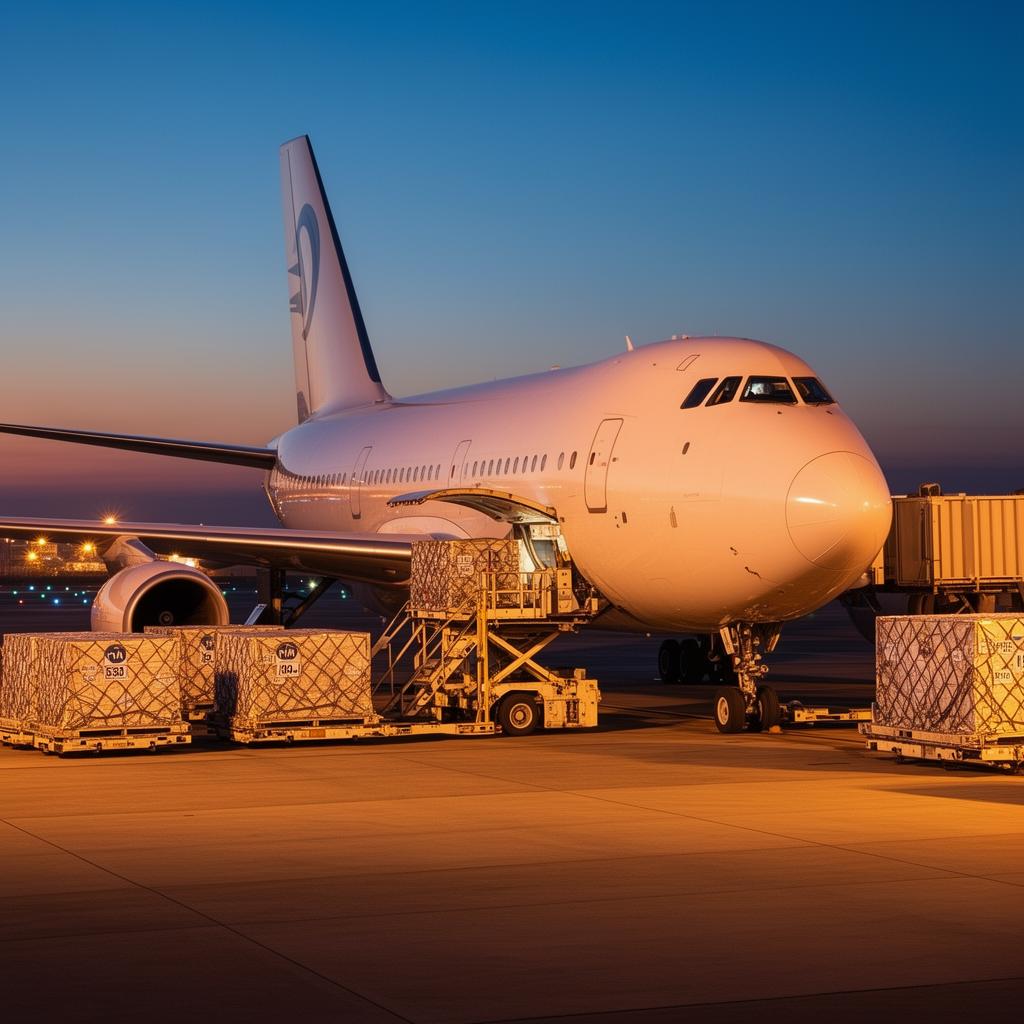
Air freight offers speed but faces the strictest lithium battery regulations
Air vs Sea: Side-by-Side Comparison
| Factor | Air Freight | Sea Freight |
|---|---|---|
| Governing regulation | IATA DGR (65th Edition, 2024) | IMDG Code (Amendment 41-22) |
| Transit time: China–SA | 3–7 days | 25–35 days |
| UN 3480 standalone | Cargo aircraft only (CAO) | Permitted (with restrictions) |
| UN 3481 in/with equipment | Permitted on passenger & cargo aircraft | Permitted |
| State of charge (SoC) limit | ≤ 30% for Section II | No SoC restriction |
| Max net quantity per package | 5 kg (Section II) / 35 kg (Section I CAO) | No specific limit (vessel approval dependent) |
| DGD required? | Yes (Section I); No (Section II with doc) | Yes (all regulated shipments) |
| Cost comparison | Higher (DG surcharges apply) | Lower (but longer transit) |
Road Freight within South Africa
Packing Requirements
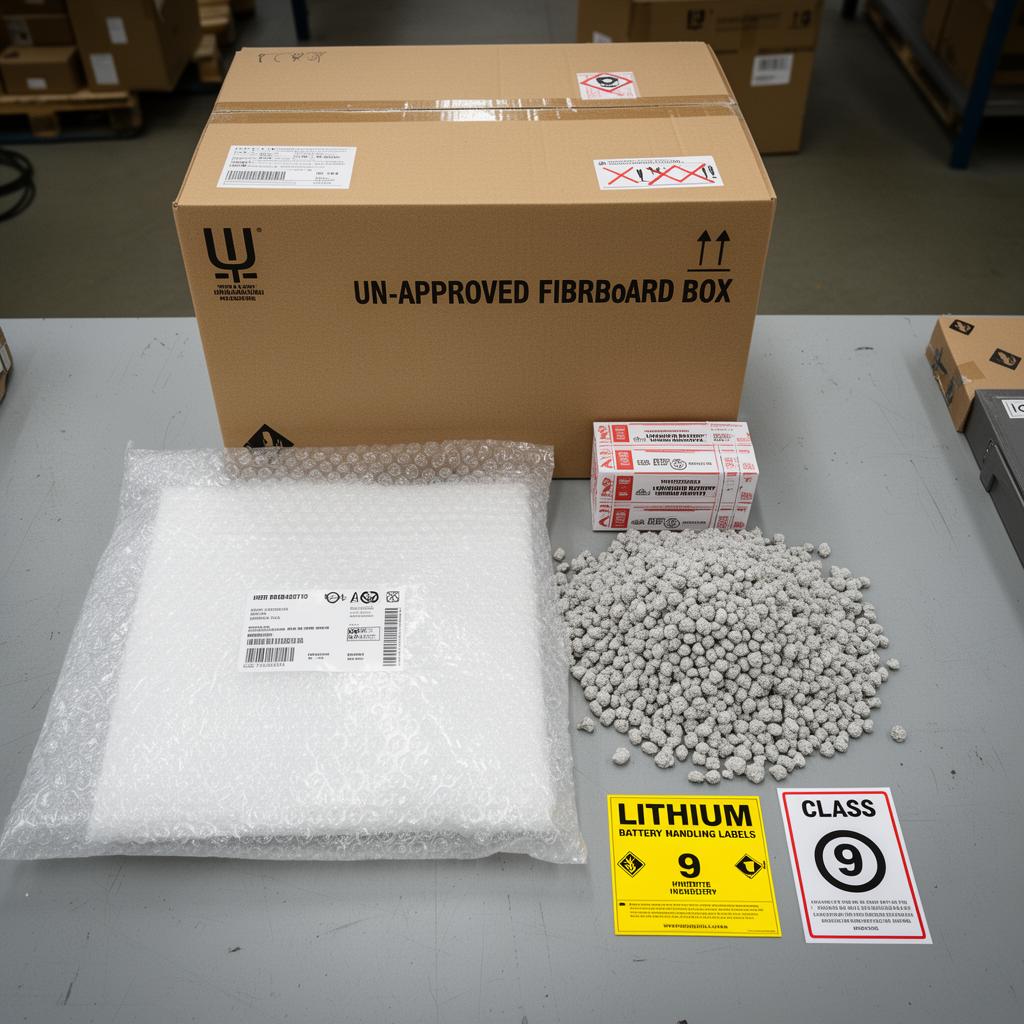
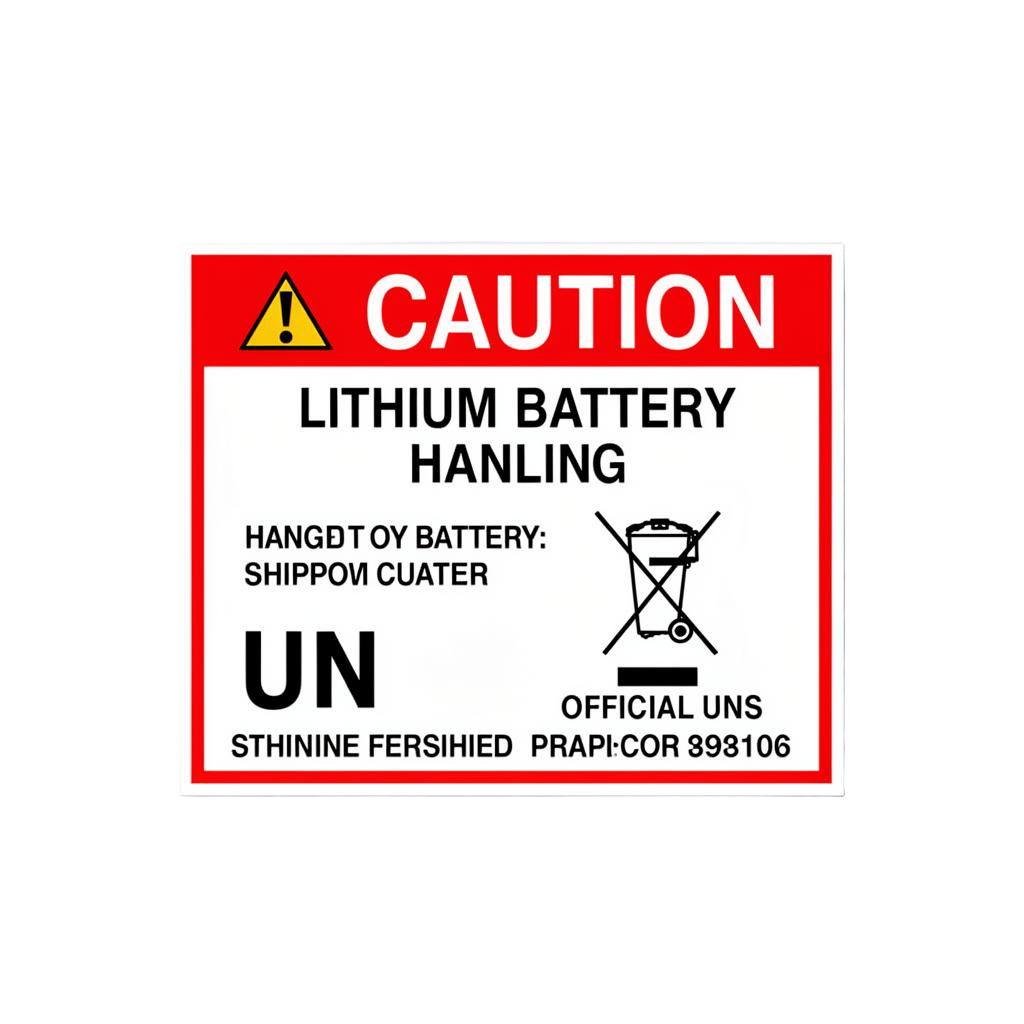 Lithium battery handling label – required on every outer package
Packaging is arguably the most critical compliance element for lithium battery shipments. Inadequate packaging is the single most common cause of rejected shipments, regulatory penalties, and – in the worst case – in-transit incidents. While the specific requirements differ based on the UN number, section (I or II), and transport mode, the general principles below apply across the board. For detailed section- and mode-specific packing instructions, refer to the relevant IATA DGR or IMDG Code packing instruction for your battery type.
General Requirements (All Lithium Batteries)
- Each battery or cell must be individually protected against short circuit (e.g. by insulating terminals with tape, placing in individual inner packaging, or using dividers)
- Batteries must be packed in strong outer packaging (UN-approved for Section I) capable of withstanding a 1.2 m drop test
- The package must contain sufficient cushioning to prevent movement and contact between batteries
- For batteries packed with equipment: the equipment must be secured and protected from damage, and batteries must not be able to move within the package
- Outer packages must bear the lithium battery handling label on a contrasting surface
- Damaged, defective, or recalled batteries require special packaging and prior carrier approval
Critical Warning
Documentation Requirements
Documentation for lithium battery shipments extends well beyond a standard commercial invoice and packing list. Missing or incorrect documentation is the second most common reason for shipment rejection – after packaging failures.
UN 38.3 Test Summary
Every lithium battery offered for transport must have passed the UN Manual of Tests and Criteria, Part III, Sub-section 38.3 tests. This includes altitude simulation, thermal cycling, vibration, shock, external short circuit, impact/crush, overcharge, and forced discharge. The test summary must be made available to the carrier upon request. Since January 2020, IATA requires a written test summary – not just a statement of compliance.
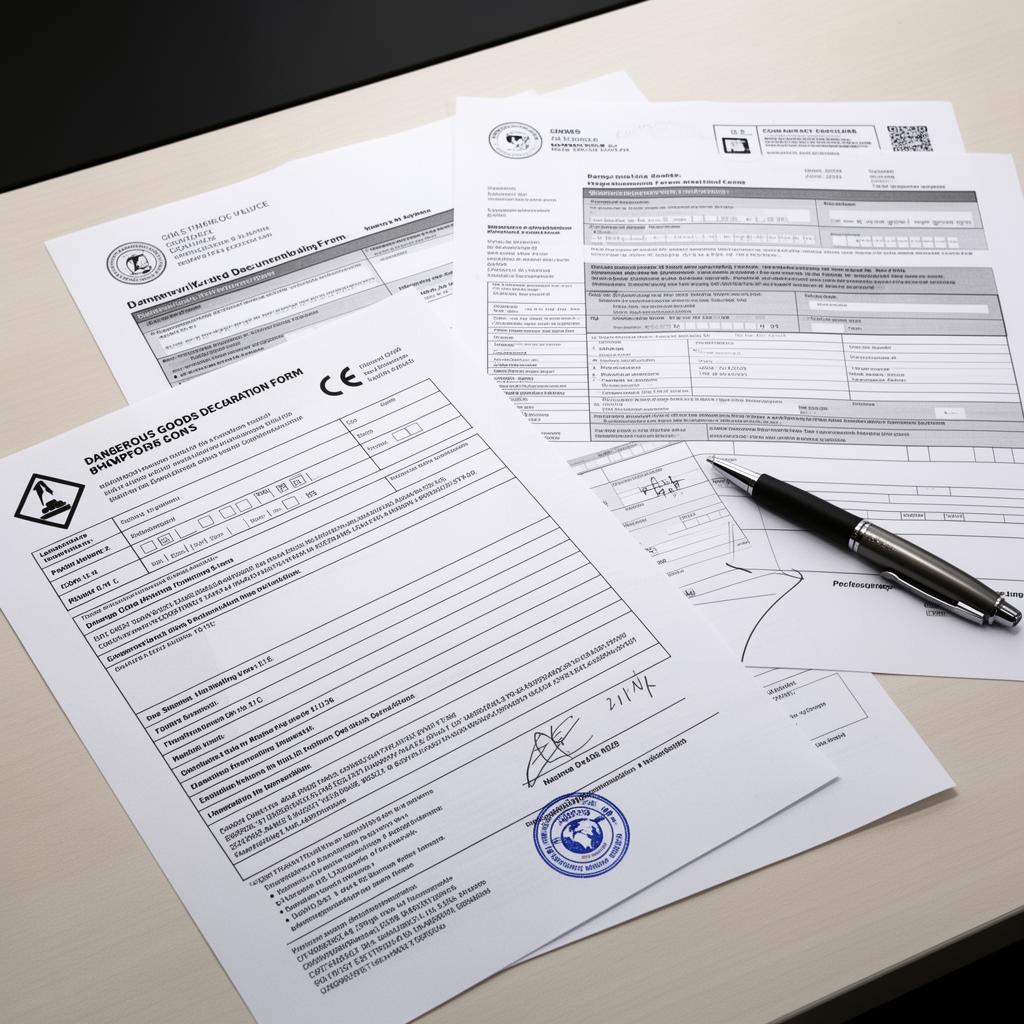
Dangerous Goods Declaration / Shipper's Declaration
Required for all Section I shipments by air and all regulated sea freight consignments. This is the core document that identifies what is being shipped, its classification, and confirms the shipment has been prepared in accordance with the applicable regulations. It must be completed by a certified dangerous goods shipper and includes details such as the proper shipping name, UN number, class, quantity, and an emergency contact.
Material Safety Data Sheet (MSDS/SDS)
While not always legally required for transport, many carriers and customs authorities request the MSDS as supporting documentation. It should detail the battery chemistry, watt-hour rating, lithium content, and emergency procedures.
South African Import Documentation
SARS customs clearance requires the standard import documents (invoice, packing list, bill of lading/airway bill), plus any applicable NRCS (National Regulator for Compulsory Specifications) compliance documentation for consumer electronics. IEC 62133 certification may be required for batteries sold in South Africa.
Common Mistakes to Avoid
Based on hundreds of lithium battery shipments on the China–South Africa corridor, these are the most frequently encountered compliance failures – each of which can result in shipment rejection, delays, financial penalties, or worse.
Treating Section II as 'exempt'
Many shippers assume that Section II lithium batteries (small batteries in limited quantities) are not regulated. This is incorrect. Section II shipments still require the lithium battery mark, a transport document with specific wording, and compliance with all applicable packing instructions. The reduction in requirements compared to Section I does not mean exemption.
Relying on the factory's UN 38.3 test certificate without verification
Chinese factories frequently provide UN 38.3 test summaries that are incomplete, outdated, or – in some cases – fabricated. The test summary must be from an accredited laboratory and must cover the specific battery model being shipped. A generic test report for a 'similar' battery is not acceptable.
Incorrect watt-hour (Wh) rating declaration
The watt-hour rating determines whether a battery falls under Section I or Section II. An incorrect Wh rating on the MSDS or shipping documents can result in the wrong packing instruction being applied. Always verify the Wh rating independently: Wh = Voltage (V) × Ampere-hours (Ah).
Shipping batteries at full charge by air
For UN 3480 Section II shipments by air, batteries must be shipped at a state of charge (SoC) not exceeding 30% of rated capacity. This is a relatively recent IATA requirement that many manufacturers in China are not yet consistently observing. Verify SoC before the shipment leaves origin.
Failing to declare batteries as dangerous goods entirely
A surprisingly common issue – particularly with e-commerce and small parcel shipments. Lithium batteries (including those inside devices) are dangerous goods and must be declared as such. Undeclared shipments are illegal and represent a serious safety risk.
Using non-compliant packaging from the factory
Standard retail packaging is not transport packaging. The outer shipping carton must meet the performance standards prescribed by the applicable packing instruction – including the 1.2 m drop test. UN-approved packaging (marked with the UN emblem and specification code) is required for Section I shipments.
Overlooking carrier-specific restrictions
Even when a shipment meets all IATA or IMDG requirements, individual carriers may impose additional restrictions. Some airlines have lower Wh limits than IATA prescribes, some shipping lines restrict the number of battery packages per container, and some refuse certain UN numbers entirely. Carrier acceptance must be confirmed before booking.
Practical Tips for South African Importers
Navigating lithium battery compliance doesn't have to be overwhelming. These practical recommendations – drawn from real operational experience – can significantly reduce the risk of delays and non-compliance:
Engage your freight forwarder before placing the purchase order
The cheapest factory quote is meaningless if the batteries can't be shipped compliantly. A specialist freight forwarder can advise on packaging specifications, documentation requirements, and carrier availability before you commit to a supplier.
Request the UN 38.3 test summary and MSDS upfront
Ask your Chinese supplier for these documents during the quotation phase – not after the goods are manufactured. If a supplier cannot provide a valid UN 38.3 test summary, that is a red flag.
Specify packaging requirements in your purchase contract
Include IATA/IMDG-compliant packaging as a contractual requirement. This shifts the responsibility (and cost) of compliant packaging to the manufacturer, where it is most efficiently managed. Be specific: reference the applicable packing instruction number.
Consider sea freight for bulk battery shipments
Unless transit time is critical, sea freight is almost always the more practical and cost-effective option for large-volume lithium battery imports. The IMDG Code is less restrictive than IATA DGR, and shipping lines generally have higher acceptance tolerances than airlines.
Use a pre-shipment inspection (PSI) at origin
A physical inspection at the Chinese warehouse – verifying packaging compliance, labelling, SoC levels, and documentation – before the shipment is dispatched can prevent costly rejections at the port or airport. This is particularly important for first-time suppliers.
Build in lead time for DG approvals
Carrier approvals for dangerous goods shipments are not instant. Allow a minimum of 3–5 working days for airline DG acceptance confirmation and 2–3 days for shipping line booking confirmation. Peak season (Q4) may require longer lead times.
Maintain a DG training record for your team
Under both IATA and IMDG regulations, anyone involved in the preparation, offering, or acceptance of dangerous goods for transport must receive appropriate training. This includes procurement staff who specify battery shipments, warehouse personnel who handle them, and logistics coordinators who prepare documentation.
South Africa–Specific Considerations
South Africa's regulatory environment for lithium batteries is evolving. While the country aligns broadly with international standards, there are several local considerations that importers must be aware of:
SARS Customs Classification
Lithium-ion batteries are classified under HS heading 8507.60. Lithium metal batteries fall under 8506.50. The applicable duty rate and VAT treatment depend on the specific sub-heading and whether the batteries are imported as standalone products or as components of equipment.
NRCS Compulsory Specifications
Consumer lithium batteries sold in South Africa may need to comply with NRCS-administered compulsory specifications, including IEC 62133 (safety requirements for portable sealed secondary cells). Compliance is typically demonstrated through a Letter of Authority (LOA) from the NRCS.
SANS 10228 Road Transport
The South African National Standard 10228 governs the identification and classification of dangerous goods for road transport. It aligns with the UN Model Regulations but has specific local requirements for placarding, documentation, and driver training. Depending on the quantity and classification, lithium battery consignments may need to be transported by a registered DG vehicle with a trained DG driver.
Waste Management and Recycling
South Africa does not yet have a comprehensive lithium battery recycling framework, but the Department of Forestry, Fisheries and the Environment is developing Extended Producer Responsibility (EPR) regulations that will require importers and manufacturers to take responsibility for end-of-life battery management. Importers should monitor this space as compliance obligations are expected within the next 2–3 years.
Industry Insight
Shipping lithium batteries from China?
Whether UN 3480 standalone cells or UN 3481 equipment with embedded batteries – Argo Freight handles compliance, documentation, and transport from origin to destination.
Argo Freight works exclusively with registered businesses – our services are not designed for individuals.
Request a Quote