
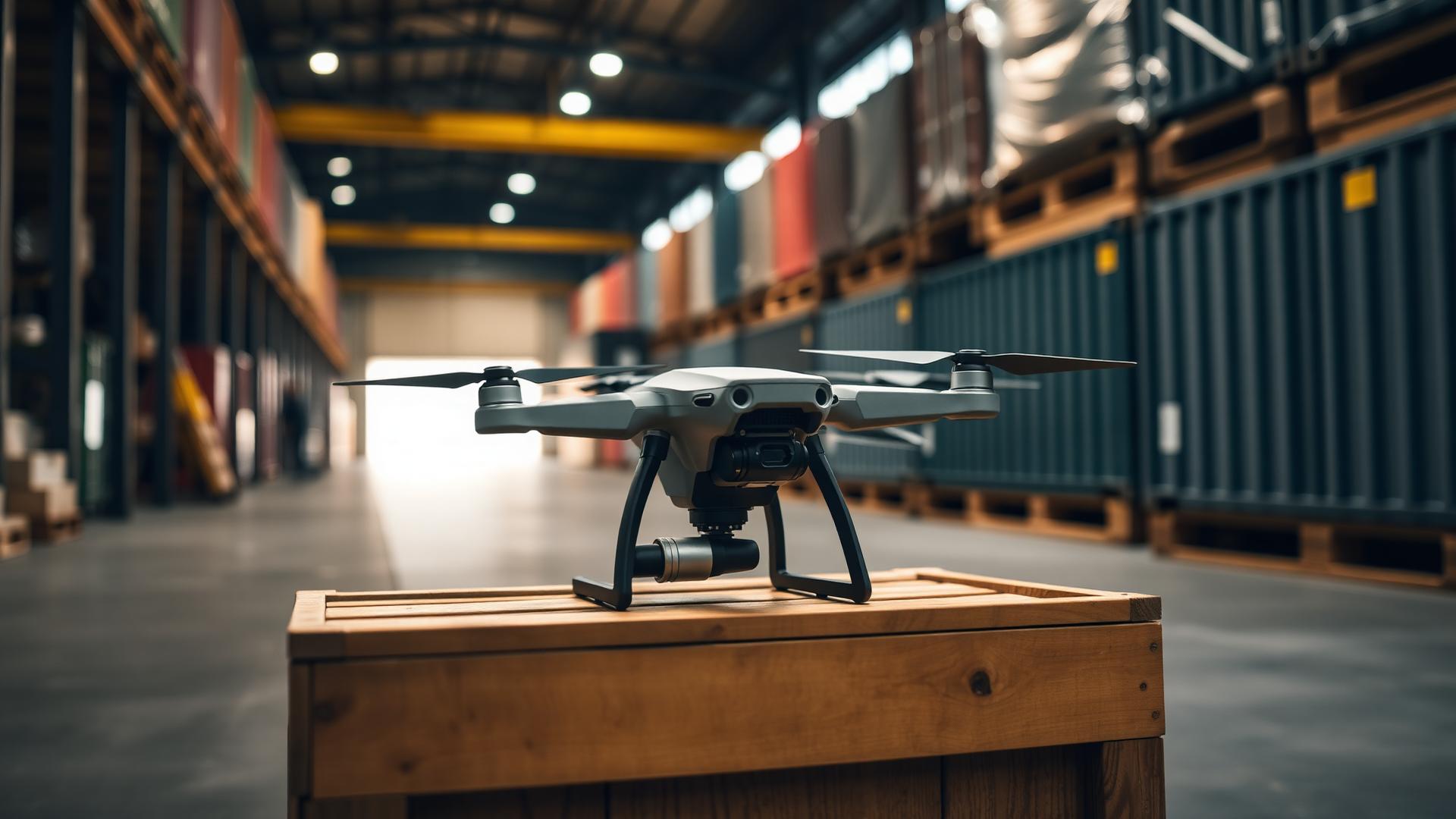
Why Drones Are Not 'Just Electronics'
At first glance, a drone looks like any other consumer electronics product – compact, lightweight, and boxed. Many shippers assume they can be sent the same way as a laptop or a camera. But drones sit at the intersection of several regulatory categories that make them genuinely complex to ship internationally.
A typical commercial drone contains:
- Lithium-ion batteries (classified as UN 3481 when contained in equipment) – regulated as Class 9 dangerous goods under both IATA DGR and the IMDG Code
- High-resolution cameras and gimbal systems – which may trigger dual-use technology screening depending on sensor resolution and spectral capability (see Section 6 for the specific thresholds that attract scrutiny)
- GPS and communication modules – subject to frequency licensing and, in some countries, import restrictions on encrypted communication devices. Modules with military-grade encryption or operating on restricted frequency bands may trigger export control flags (detailed in Section 6)
- Propulsion systems and flight controllers – which may fall under unmanned aerial vehicle (UAV) export controls depending on range, payload capacity, and autonomy level
This combination means a single drone shipment can simultaneously be a dangerous goods consignment, a controlled technology export, and a product requiring specific import permits – none of which are handled by standard courier workflows.
Industry Insight
The Courier Option: When It Works
International courier services – DHL Express, FedEx, UPS, and similar – are designed for speed and simplicity. They excel at moving standardised parcels through automated sorting networks with minimal human intervention. For certain drone shipments, a courier is a perfectly viable option.
Couriers work well when:
- The drone is a small consumer model (sub-250g category) with a battery under 100 Wh
- The battery is installed inside the drone (not shipped as a spare)
- The destination country has no specific drone import licensing requirements
- The drone's cameras, sensors, and communication modules do not exceed the technical thresholds that trigger dual-use screening – such as high-resolution thermal imaging or encrypted data links (see Section 6 for specifics)
- The shipment is a single unit (not bulk or palletised)
- The shipment value is below the de minimis threshold of the destination country – this is the value below which imports are cleared informally without a full customs declaration (e.g. USD 800 in the United States, USD 150 in South Africa, EUR 150 in the EU)
Under these conditions, a courier can typically process the shipment through its standard dangerous goods acceptance procedures (most major couriers have Section II lithium battery programmes) and deliver within 2–5 business days.
The limitations
Courier networks are built for volume and speed, not for regulatory complexity. Their automated screening systems flag keywords like "battery," "drone," and "UAV" – and the default response is often rejection rather than investigation. This creates several practical problems:
- Shipments are rejected at origin without explanation, causing delays and rebooking costs
- Batteries above 100 Wh are refused outright by most courier air networks
- Spare batteries (not installed in equipment) shift the classification from UN 3481 to UN 3480, which many couriers will not accept
- Export control screening is not performed – the shipper bears full legal responsibility for compliance
- If a shipment is seized at customs, the courier typically has no mechanism to resolve complex regulatory holds
- Packaging standards are generic; couriers do not provide DG-specification crating or cushioning for sensitive equipment – and if non-compliant packaging is identified at any point during transit (by a ground handler, airline, or customs authority), the shipment can be rejected, held, or returned regardless of how it was originally accepted
The Freight Forwarder Option: When It Matters
A freight forwarder acts as an intermediary between the shipper and the transport carrier – but in the context of drone logistics, the forwarder's role extends far beyond booking cargo space. A specialist forwarder provides classification, compliance, documentation, and customs clearance as an integrated service.
A freight forwarder is essential when:
- The drone contains batteries exceeding 100 Wh (common in industrial and agricultural drones)
- Spare batteries are included alongside the drone – shifting classification to UN 3480
- The shipment includes multiple units, palletised or crated cargo
- The destination country requires drone import permits, type approvals, or frequency licences
- The drone's specifications (range, payload, autonomy) may trigger export control review
- The shipper needs a Dangerous Goods Declaration (DGD) prepared by certified personnel
- Full marine or air cargo insurance is required (beyond standard courier liability)
- The shipment moves by sea freight – couriers do not operate ocean services
While the bullet points above list specific scenarios where a freight forwarder is necessary, the broader principle is simpler: if you are not entirely sure whether your drone shipment meets every courier requirement, a freight forwarder is the safer choice. The cost of engaging a specialist is predictable; the cost of a rejected shipment, customs seizure, or regulatory fine is not.
Why It Matters
Courier vs Freight Forwarder: Side-by-Side
The following table summarises the key differences across the factors that matter most when shipping drones internationally.
| Factor | Courier | Freight Forwarder |
|---|---|---|
| DG classification | Automated screening – often rejected | Manual classification by trained staff |
| Lithium battery compliance | Size/Wh limits; many couriers refuse | Full UN 3481 compliance handled |
| Export control screening | None – shipper's responsibility | Pre-shipment screening and advisory |
| Packaging | Standard courier packaging | Custom crating, foam inserts, DG-spec packaging |
| Documentation | Commercial invoice + waybill | DGD, SDS, export licences, customs entries |
| Customs clearance | Automated broker (limited for complex goods) | Dedicated customs broker with DG experience |
| Insurance | Standard courier liability (limited) | Full marine/cargo insurance available |
| Tracking & visibility | Excellent real-time tracking | Milestone-based; varies by forwarder |
| Cost (small parcel) | Generally lower | Higher – but includes compliance |
| Cost (bulk / palletised) | Expensive or unavailable | Significantly more cost-effective |
| Transit time | 2–5 days (express) | 5–35 days (air/sea) |
| Seizure / rejection risk | High for drones with batteries | Low – pre-cleared and compliant |
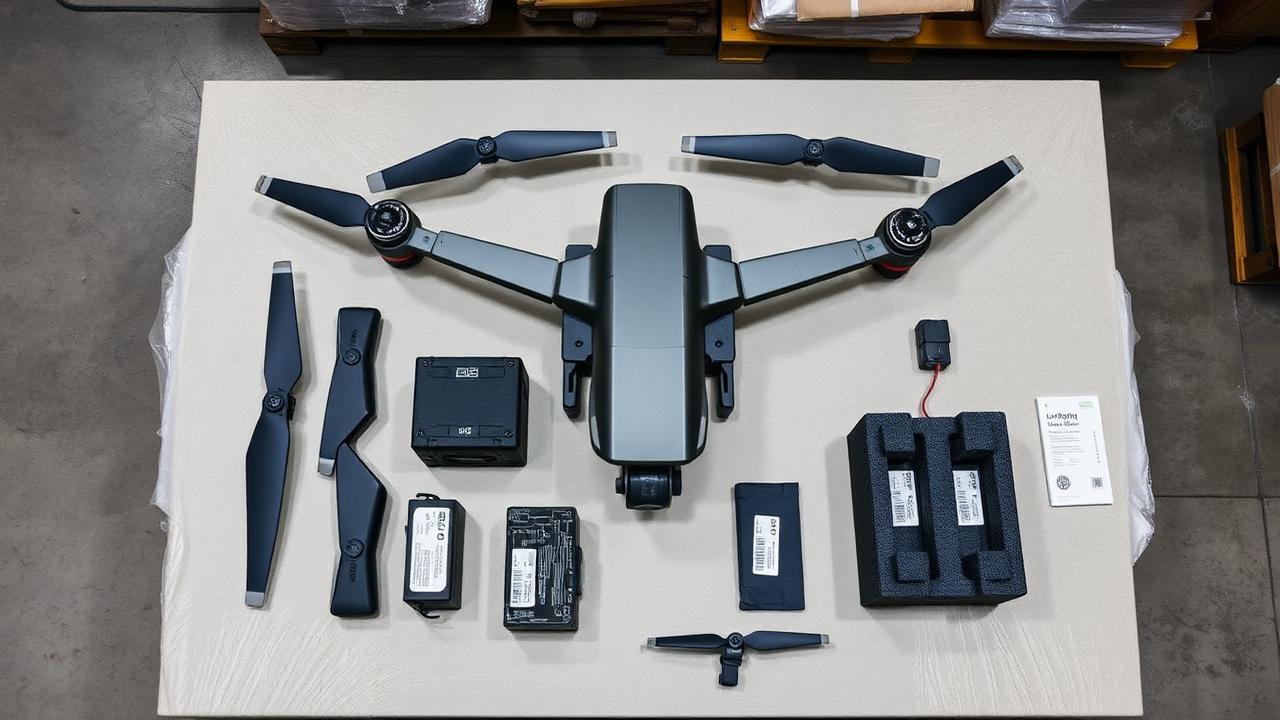
Proper preparation: a drone disassembled for shipping with batteries separated and DG-compliant packaging materials.
The Lithium Battery Problem
Lithium batteries are the single most common reason drone shipments are rejected, delayed, or seized. Every drone contains at least one lithium-ion battery, and many ship with spares. The regulatory framework is strict because lithium batteries present a genuine fire risk during transport – particularly by air.
Key regulatory points
- UN 3481 – applies when the battery is contained in or packed with equipment (the drone itself). This is the standard classification for a drone with its battery installed.
- UN 3480 – applies when batteries are shipped standalone – e.g., spare batteries packed separately. UN 3480 shipments face significantly stricter requirements and are refused by many air carriers.
- Watt-hour (Wh) rating – determines the applicable section under IATA DGR and the IMDG Code. Batteries under 100 Wh qualify for Section II (lighter documentation); those over 100 Wh require Section I (full DG compliance).
- State of Charge (SoC) – for air freight, standalone lithium batteries (UN 3480) must be shipped at no more than 30% SoC. This requirement does not apply to sea freight.
Couriers handle Section II (sub-100 Wh, battery in equipment) reasonably well. But the moment you add spare batteries, exceed 100 Wh, or need to ship batteries outside the drone, the courier model breaks down. Freight forwarders with DG certification can prepare the required Dangerous Goods Declaration, ensure compliant packaging, and book with carriers that accept the shipment.
Common Pitfall
Export Controls and Dual-Use Screening
Beyond dangerous goods compliance, certain drones are subject to export controls as dual-use technology. "Dual-use" means the item has both civilian and potential military or surveillance applications. Export control regimes exist to prevent the proliferation of technology that could be used for military purposes, terrorism, or human rights abuses.
Whether a drone triggers export control scrutiny depends on its specifications:
- Range and endurance – drones capable of flying beyond visual line of sight (BVLOS) over long distances are more likely to be controlled
- Payload capacity – the ability to carry significant weight beyond the drone's own sensors increases dual-use risk
- Autonomous navigation – fully autonomous flight capability (without a human operator) raises control concerns
- Imaging sensors – thermal cameras with a resolution finer than 25 mK (millikelvin) NETD, multispectral or hyperspectral sensors, and LiDAR systems with centimetre-level accuracy may exceed controlled thresholds. Standard visible-light cameras used for photography or videography typically do not trigger screening
- Encrypted communication – drones with military-grade encryption (e.g. AES-256 with hardware key management) or operating on restricted military-band frequencies may require specific export licences. Consumer-grade Wi-Fi or standard 2.4/5.8 GHz data links generally do not raise flags
How screening actually happens in practice
When you ship a drone internationally, the process that may trigger export control scrutiny typically works as follows:
At the point of export, you (or your freight forwarder) submit shipping documentation including the commercial invoice, packing list, and customs declaration. These documents describe the goods – including product descriptions, HS/tariff codes, technical specifications, and the declared end-use. Customs authorities in the origin country (and sometimes the destination country) run this information against national control lists and sanctioned entity databases.
If the description flags the shipment – for example, the HS code maps to a controlled UAV category, the declared specs exceed a controlled threshold, or the destination is a sanctioned or high-risk country – the shipment is referred for manual review. A customs officer or export control authority may then request additional information: detailed technical specifications, end-user certificates, or proof that the item has been classified and does not require an export licence.
If the review determines that the drone does fall under a controlled category, the shipper must either produce a valid export licence or the shipment is stopped. Depending on the jurisdiction, shipping controlled goods without the correct licence can result in the seizure of the goods, significant fines, and in serious cases, criminal prosecution.
This is why pre-shipment classification matters. A freight forwarder with export control expertise screens the drone's specifications against applicable control lists before it reaches customs – identifying whether a licence is needed and advising the shipper accordingly. Couriers do not perform this step; the shipper is entirely responsible for compliance.
Practical Note

Documentation review at a cargo terminal – correct paperwork prevents delays and customs holds.
Customs and Import Requirements
Drone imports are subject to varying regulatory frameworks depending on the destination country. Unlike standard electronics, drones may require:
- Civil aviation authority registration or type approval before the drone can be legally operated
- Radio frequency licences for the drone's communication and control systems
- Import permits for equipment classified as dual-use or containing controlled technology
- Proof of conformity with local safety standards (CE, FCC, or equivalent)
- End-use declarations confirming the drone's intended civilian application
Many destination countries treat drones differently from standard electronics at customs because of their aviation and surveillance implications. In some jurisdictions – including parts of the Middle East, Africa, and South Asia – drones cannot be imported without prior approval from a civil aviation authority or a ministry of defence. Attempting to import a drone into one of these countries without the necessary permit will result in the shipment being held indefinitely, with the importer facing storage fees and the risk of confiscation.
Even in countries with more permissive import regimes, drones frequently attract additional customs scrutiny. The HS codes used for unmanned aircraft overlap with controlled technology categories, meaning that customs officers may request supporting documentation – such as technical specifications, proof of civilian end-use, or evidence that the drone does not exceed controlled performance thresholds – before releasing the shipment. Having this documentation prepared and submitted proactively, rather than waiting for a customs query, is the difference between a smooth clearance and a multi-week delay.
Cost Considerations
The cost comparison between courier and freight forwarder is not as straightforward as it appears. Courier rates are transparent and easy to obtain – but they don't include the hidden costs that surface when things go wrong.
Visible costs
For a single consumer drone (sub-2 kg, battery under 100 Wh), a courier is almost always cheaper – typically USD 50–150 for international express delivery. A freight forwarder's minimum charges (documentation, handling, customs brokerage) will exceed this for a single small unit.
Hidden costs
- Courier rejection and rebooking: each failed attempt costs time and reshipping fees
- Customs holds: storage charges at destination can accumulate rapidly (USD 20–100+ per day)
- Seizure: if a shipment is confiscated for non-compliance, the entire value of the goods is lost
- Non-compliance penalties: fines for undeclared dangerous goods can reach USD 50,000+ in some jurisdictions
- Damage claims: courier liability is often capped at USD 100 per shipment – far below the value of most commercial drones
For bulk shipments, the economics shift decisively in favour of a freight forwarder. Shipping 50 drones by sea freight with full compliance documentation is a fraction of the per-unit cost of sending 50 individual courier parcels – and the risk of rejection or seizure is virtually eliminated.
Decision Framework
Use the following decision tree to determine which shipping method suits your drone consignment. Work through each question in sequence – if the answer is "no" at any point, a freight forwarder is the appropriate choice.
The drone industry is growing rapidly, and so is the volume of drone shipments moving across borders. For simple consumer models, courier services remain a fast and affordable option. But as drones become larger, more powerful, and more commercially significant, the logistics challenges scale with them.
The cost of getting it wrong – rejected shipments, customs seizures, regulatory penalties, damaged equipment – almost always exceeds the cost of doing it right from the start. Whether you are a manufacturer, distributor, or end-user, understanding the distinction between courier and freight forwarder logistics is the first step toward shipping drones confidently, compliantly, and cost-effectively.